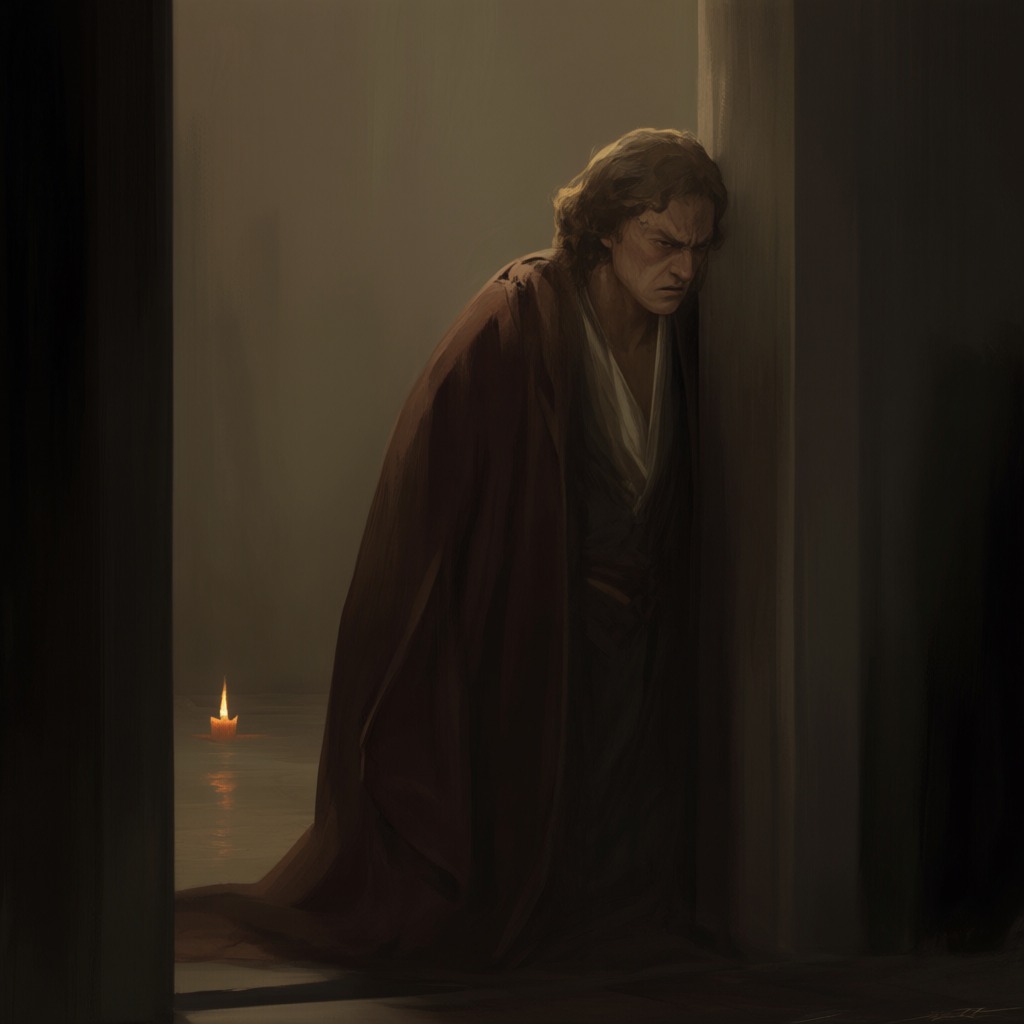
Pacificus of Tivoli
Pacificus of Tivoli is a monk of the abbey, a scholar devoted to the study of pagan poets and rhetoric. He appears in the scriptorium during the crucial debate on laughter and marginalia, and his presence and remarks serve as a barometer of the intellectual currents and political factions that swirl beneath the surface of monastic life. He is one of the Italian monks who resent the dominance of foreign librarians and who, in the chaos following the murders, become a voice for change and suspicion.
Identity and Role in the Scriptorium
Pacificus is introduced as a monk who "knows the pagan poets very well" . During the debate on laughter, when Venantius of Salvemec and Jorge of Burgos clash over the legitimacy of comic images, Pacificus contributes a specific example: he quotes the riddle of the fish by the African poet Symphosius, a witty and enigmatic verse that Jorge immediately condemns as a product of the Evil One (E00777–E00781). This moment establishes Pacificus as a man of learning who values the literary and rhetorical traditions of antiquity, even when they conflict with the stern orthodoxy of Jorge. He is also a member of the Italian faction that Aymaro of Alessandria represents, a group that believes the abbey should be governed by Italians and that the library should be opened to the vernacular and to the commercial and intellectual currents of the Italian cities . Pacificus is thus not merely a scholar but a partisan in the abbey's internal politics.
Life and Plot Trajectory
Pacificus's role in the plot is largely that of a witness and a participant in the background. He is present in the scriptorium during the debate that first hints at the forbidden book and the secret of the finis Africae. He is also one of the monks who, after the death of Malachi of Hildesheim, gathers with Alinardo of Grottaferrata, Aymaro of Alessandria, and Peter of Sant'Albano to discuss the succession of the librarian and the abbot's authority . In the final chaos of the fire, Pacificus is seen abandoning all hope of saving the abbey and attempting to seize a crazed mule to flee the inferno, shouting to Adso of Melk to do the same . This act of self-preservation, while understandable, marks him as a pragmatist who, unlike the fanatical Jorge or the despairing William of Baskerville, chooses survival over futile heroism.
Key Actions and Objectives
Pacificus's primary objective is the pursuit of learning, specifically the study of pagan poetry and rhetoric. He is a man who values the intellectual heritage of antiquity and who chafes under the restrictions imposed by the library's guardians. His quotation of Symphosius's riddle is not merely an academic exercise; it is a provocation, a demonstration that the pagan poets possess a wit and wisdom that the orthodox Jorge cannot tolerate. He is also a political actor, aligned with the Italian monks who seek to break the power of the foreign librarians and the abbot who supports them. His presence in the group that confronts the abbot after Malachi's death shows that he is willing to act on his convictions, even if his ultimate flight from the fire suggests a limit to his commitment.
Relationships and Conflict
Pacificus's primary conflict is with Jorge of Burgos, the blind guardian of orthodoxy who condemns all laughter and all pagan learning as dangerous. The debate in the scriptorium is a direct confrontation between Pacificus's appreciation of classical wit and Jorge's insistence on a joyless, literal interpretation of Scripture. Pacificus is also aligned with Aymaro of Alessandria and the Italian faction, who oppose the abbot's reliance on foreign monks like Malachi and Berengar of Arundel. This faction sees the library's secrets as a tool of oppression and seeks to open the abbey to the new commercial and intellectual forces of the Italian cities . Pacificus's relationship with William of Baskerville is indirect but significant: William's investigation into the murders and the forbidden book ultimately vindicates the kind of intellectual curiosity that Pacificus represents, even as it reveals the deadly consequences of that curiosity when it is pursued without restraint.
Change and Ending
Pacificus undergoes no dramatic transformation. He begins as a scholar and a partisan of the Italian faction, and he ends as a survivor, fleeing the burning abbey on a stolen mule. His final act is one of self-preservation, a retreat from the catastrophe that has consumed the library and the community. This ending is consistent with his character: he is a man of learning and political ambition, but not a martyr. He is willing to fight for his vision of the abbey, but not to die for it. His survival, in contrast to the deaths of Jorge, Malachi, and the abbot, suggests that the future belongs not to the fanatics or the guardians of the old order, but to the pragmatists who can adapt and survive.
Narrative Role and Evaluation
Pacificus of Tivoli serves as a representative of the intellectual and political currents that the novel explores. He embodies the tension between the classical and the Christian, the Italian and the foreign, the open and the closed. His presence in the scriptorium debate helps to establish the central conflict over laughter and the forbidden book, and his role in the Italian faction provides a crucial political dimension to the mystery. He is a minor character, but his actions and allegiances help to illuminate the complex web of motives and conflicts that drive the plot. His ultimate flight from the fire is a fitting end for a man who valued survival and pragmatism over the doomed certainties of the abbey's warring factions.